Legal
Most of us are aware of the transformative power of data science in tech-heavy fields such as ecommerce, social media, fintech, and others, but what about the legal world? Although not the most obvious use case for data science, “legal analytics” is starting to gain a foothold across the industry. Most endeavors into legal analytics help solve experiential biases- even the most experienced of attorneys rely heavily on their own experiences, while ignoring the practically infinite wealth of legal data that now exist. Instead, new computer technology allows these professionals to (a) make use of millions of rows of legal data, and in doing so, to (b) better serve their clients. This article discusses some of the most common uses for data in the legal industry.
Preventing Litigation and Predicting Case Outcome
As aforementioned, there is a nearly inexhaustible amount of legal data out there today. This used to be a bad thing; it is now a good thing. It used to be a bad thing because the computer hardware necessary to analyze that much data didn’t exist. But exponential improvements to the capability of relatively inexpensive computers now make these enormous datasets available to the masses. As a result, data-competent professionals can examine millions of case outcomes, rulings, statutes, and other legal records to see patterns and evidence that they wouldn’t otherwise have seen.
Predictive analytics is a subfield of machine learning, a field that deals with the process of teaching a computer to automatically create information we don’t already know, using only information we do know. With that in mind, tech-savvy legal professionals can leverage predictive analytics to predict the outcome of a future case (information we don’t know) using only the known information surrounding that case. The reason why this strategy can be so successful is objectivity; professionals who use this algorithmic approach do not suffer from experiential bias, and are able to encompass all available information in their decision making.
Of course, a computer is no replacement for the knowledge and intuition of a well-trained attorney. But if augmented in the right way, a knowledgeable attorney with the latest data and predictive algorithms at their fingertips is unbeatable.
For example, datasets can be used to prevent litigation, or predict individual case outcomes, or both. Recently, a panel at the 2019 Corporate Counsel Symposium in Philadelphia, hosted by the Federation of Defense and Corporate Counsel, discussed this use case of data analytics. “Different data sets can be best used to help in-house counsel develop strategies by finding ways to prevent litigation in the future and predicting the outcome of certain cases…”
Internal Office Business Intelligence
Particularly as firms grow, they’ll need to be able to understand their own internal KPIs and goals. Collecting and analyzing internal data can help answer questions across several parts of the business. For example:

HR
What is our turnover like? What types of positions turnover the most? How does this compare with competitors?

Sales/Marketing
How successful was our last marketing campaign? What demographics are we reaching with our campaigns? What types of clients are we closing and are there trends over time?

Finances/Expenses
How much do we spend on printing or other administrative costs? How can these costs be categorized and are we meeting our goals?

Timesheets/hours
how many hours do our attorneys bill? Are there patterns or ways we can improve time usage?
Expert Witness & Court Reference
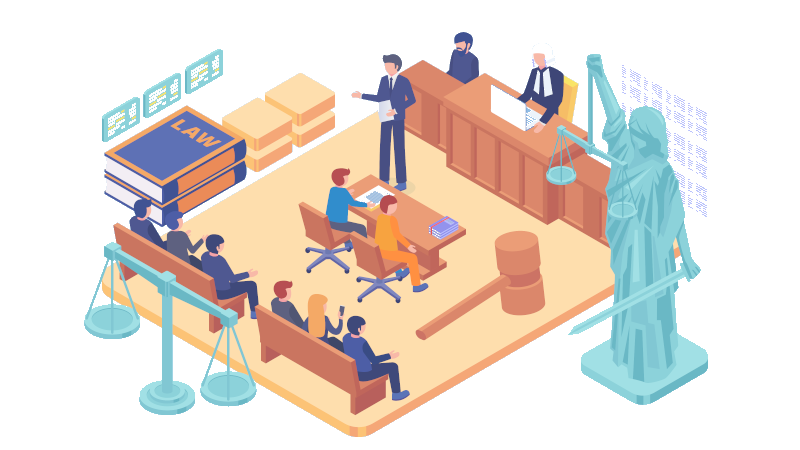
Data analysts, data scientists, and statisticians can also be useful to the legal field as expert witnesses. They can explain probability, or results of analyzed data to a courtroom.
If an expert witness isn’t necessary, another option is having an analyst prepare a writeup for the attorney to reference during the case. For example, Boxplot completed such a report for an attorney who wanted to be able to quickly determine if a witness was lying about key dates in a case. A Gantt chart allowed him to glance at the graphic without having to sift through pages of files on the spot to determine if the witness’s timeline matched up with the contract dates.
Analyzing Documents
Analyzing documents involves a few steps:

Collecting the Data
Modern technology offers many ways for computers to sift through case documents – this used to be a tremendously manual, error prone, and tedious task. Even PDFs, hand-written, and scanned documents can often be scraped by a computer with high accuracy and no need for a human to get involved.

Standardizing/Cleaning the Data
Ideally, we would choose a collection program that does a lot of this for us. However, if you’ve already scraped the data before approaching Boxplot, we may need to perform additional cleaning or standardizing depending on how the data is formatted and your goals.

Analyzing the Data
Once the data ready to go, it can be analyzed and summarized to help professionals make informed decisions. The output can be a report, dashboard, or even just a written description of what the documents cover.
How are these outcomes accomplished?
Boxplot uses both data analytics and data science techniques for legal data. We can help collect, store and analyze data, and then turn that data into insightful dashboards and reports.
You can read more in our article about reporting & dashboarding, which also covers common applications used. We can also use more sophisticated algorithms and tools like Python and R to run predictive analytics and more difficult projects.
To read more about Big Data and the tools data scientists use to do this sort of work, our article on this subject would be a great read.
Your Organization’s Data Strategy
If you’re ready to take your firm’s data practice to the next level, Boxplot Analytics is here to help. We’ve already served numerous clients in the legal space, and we’re pleased by the prospect of working with legal professionals at all levels of prior data competence. Contact us by visiting our website today.
Get Help with Data Analytics